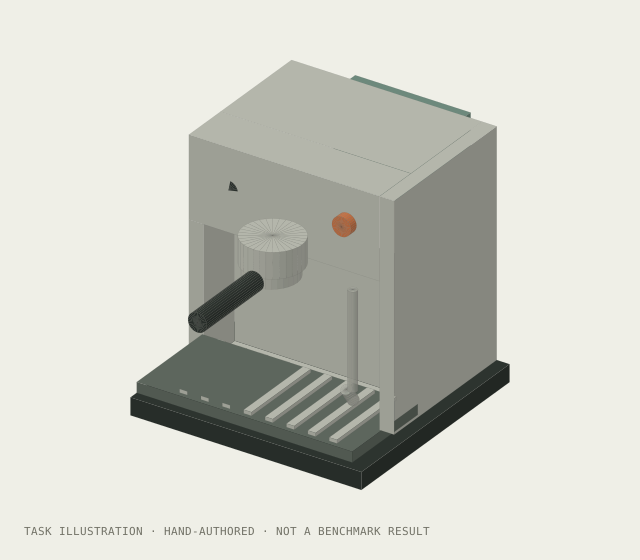
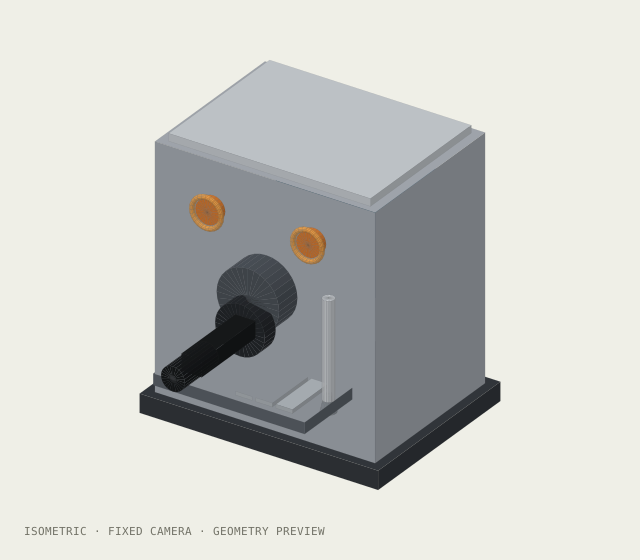
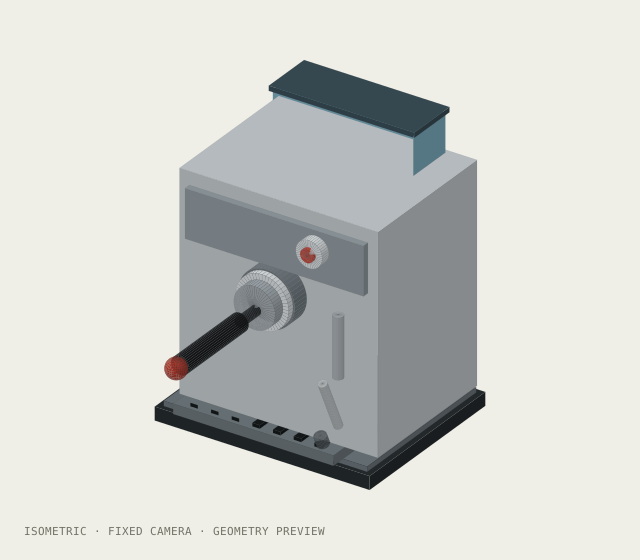
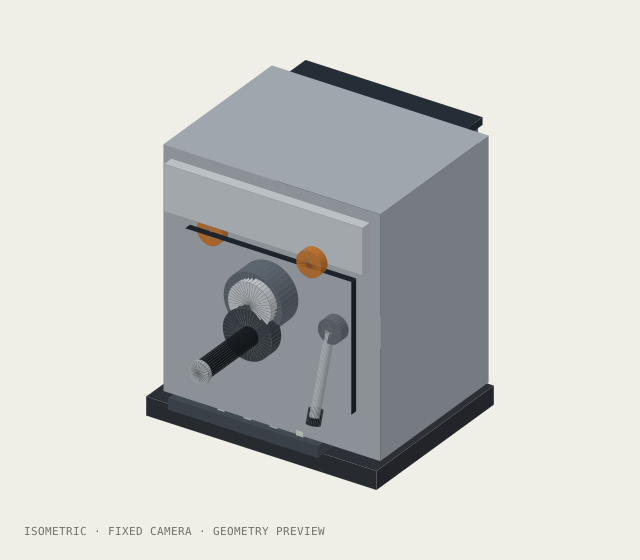
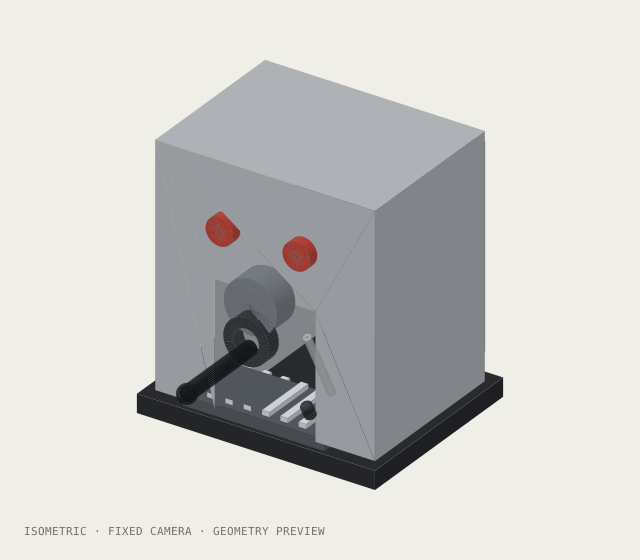
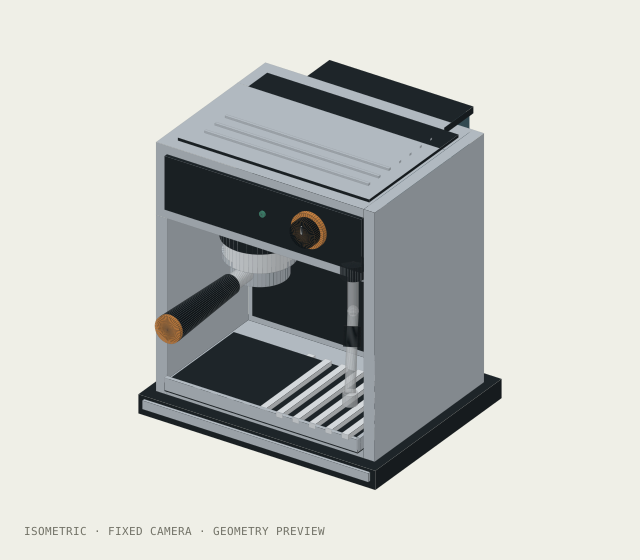
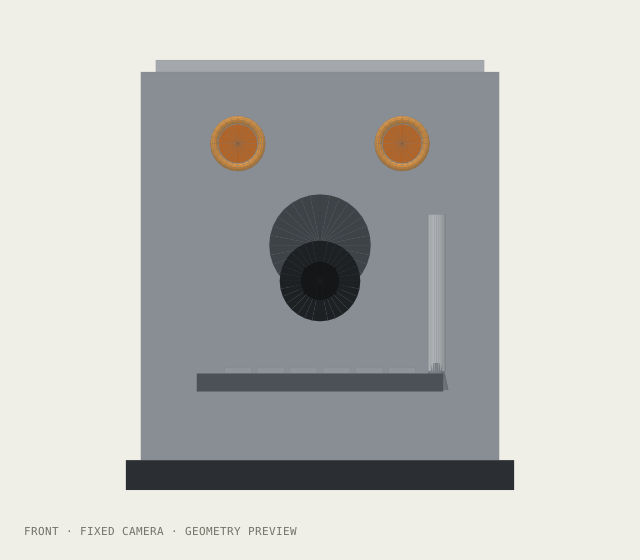
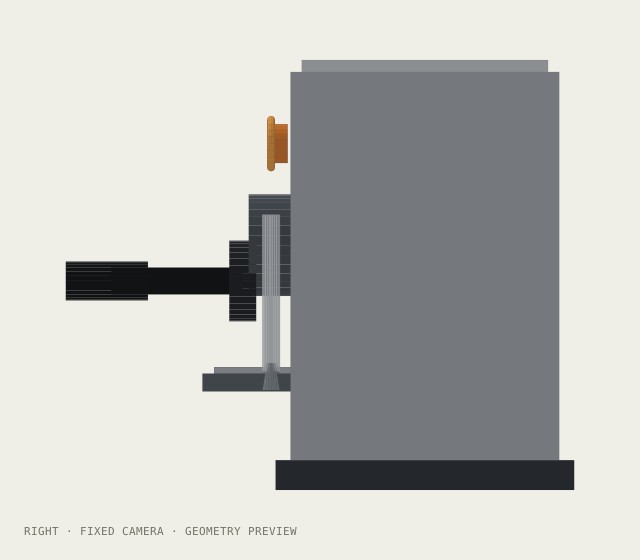
What does it take for AI to give an idea form? One espresso machine. Different models. Measured tokens, build time, and geometry, with every result open to inspection.
*Direct API runs use list-price estimates unless provider cost is supplied. Subscription runs consume Codex quota; a dollar cost is unavailable, not zero. “—” means unavailable accounting. Build checks require completion and every automatic check passing; visual quality is scored separately. Failed attempts remain in the denominator.
Provisional AI review · Codex coordinating assistant (unblinded AI review)
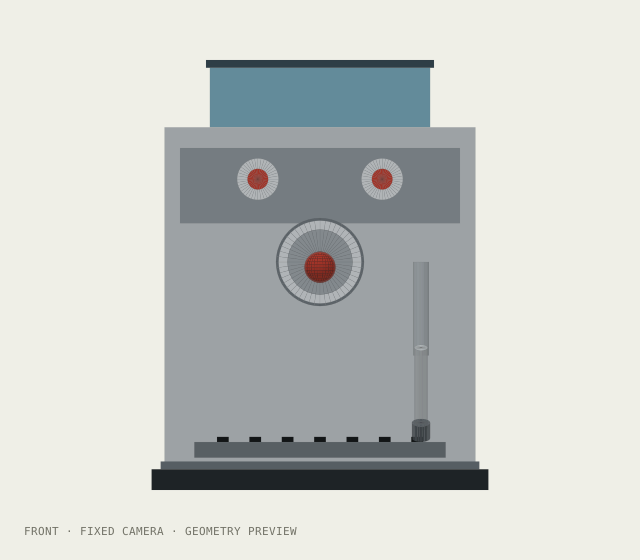
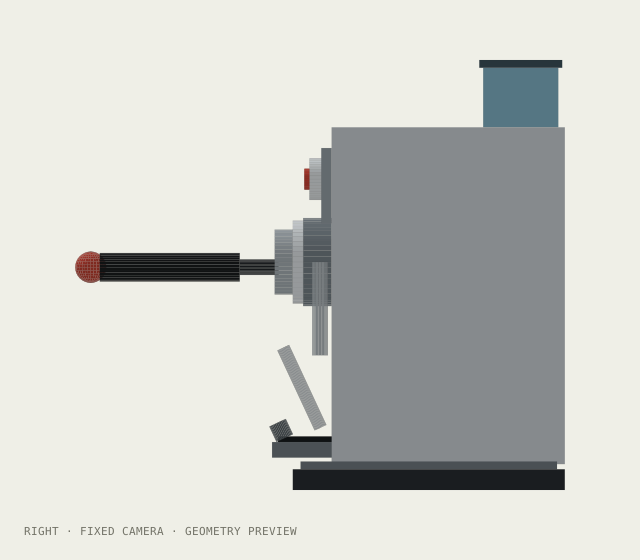
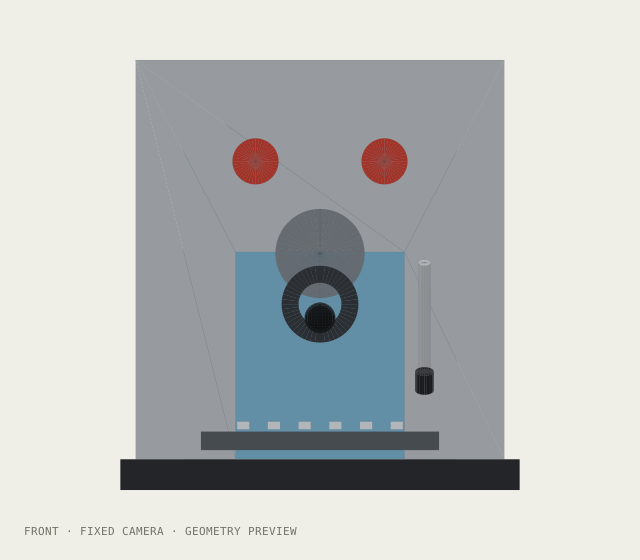
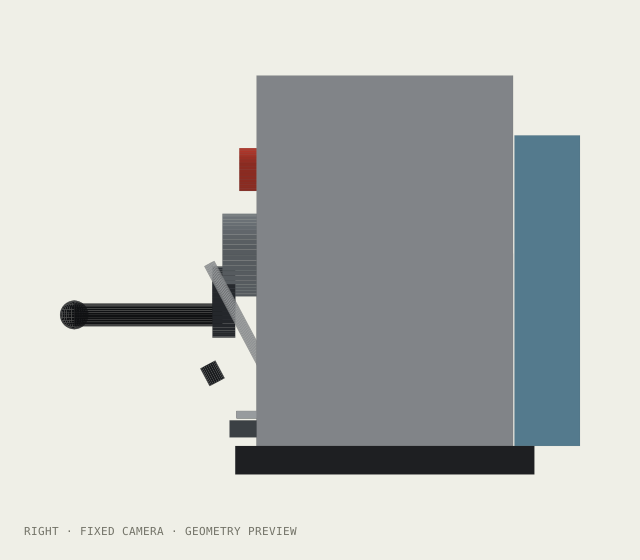
Recognizable box-style machine with two accent controls and a dark handle. The group head and portafilter appear as front-facing discs; the straight wand and shallow tray are schematic. The rear tank is largely hidden and the brewing area is not recessed. Assessed from front, right, and isometric geometry previews; shading and occlusion limit visual certainty.
Provisional AI review · Codex coordinating assistant (unblinded AI review)
The prominent rear tank, two controls, grate, and accented handle make the intended appliance recognizable. Wand sections are visibly separated in side and isometric views, weakening assembly coherence. The front-facing group-head arrangement and block body remain schematic. Assessed from three fixed geometry previews; shading and occlusion limit visual certainty.
Provisional AI review · Codex coordinating assistant (unblinded AI review)
Clear front fascia, accent controls, a contrasting rear tank, and an angled wand give the machine more definition. The group head and portafilter still read as front-facing discs; the tray and grate are shallow and the body remains a simple block. Assessed from front, right, and isometric geometry previews; shading and occlusion limit visual certainty.
Provisional AI review · Codex coordinating assistant (unblinded AI review)
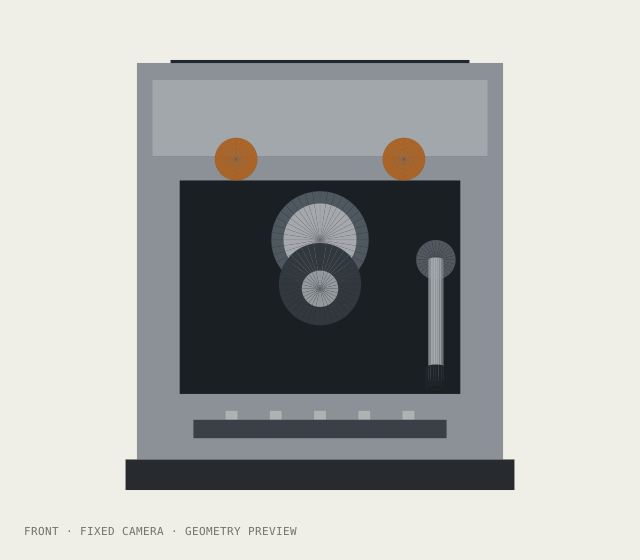
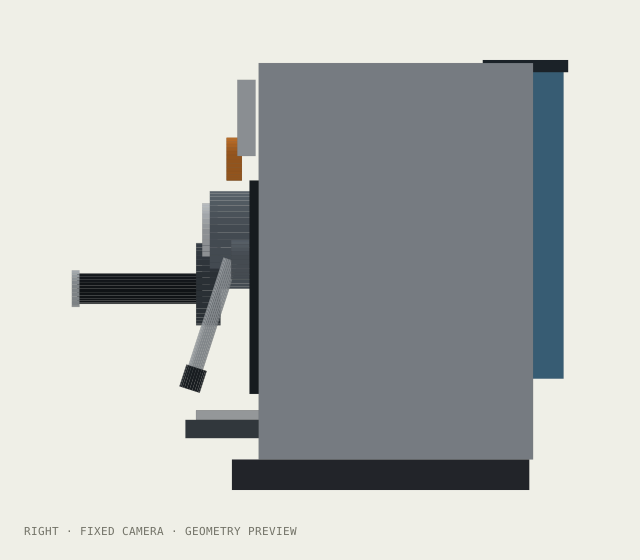
A U-shaped housing creates an actual open brewing area, with a visible rear tank, six grate bars, and accent controls. The group head and portafilter remain front-facing, and the wand tip appears detached in side and isometric views. Assessed from three fixed geometry previews; shading and occlusion limit visual certainty.
Provisional AI review · Codex coordinating assistant (unblinded AI review)
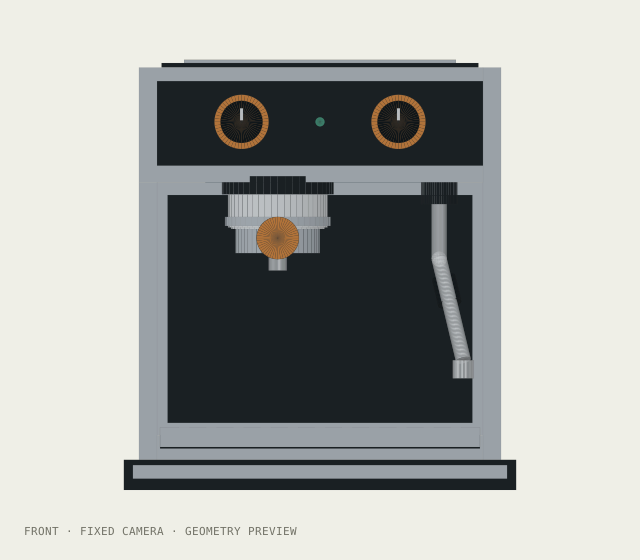
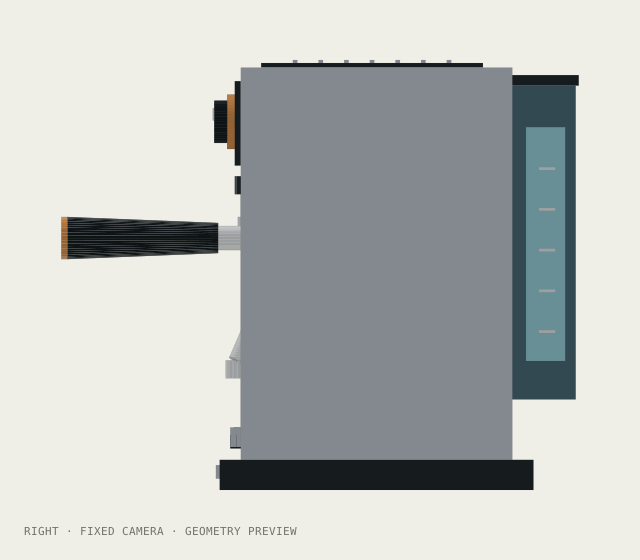
The recessed brewing bay, vertically stacked group head and portafilter, joined angled wand, dial pointers, cup-warmer rails, and tank level marks form a coherent espresso-machine concept. The body is still blocky; some grate and tray overlaps are ambiguous in the preview. Assessed from three fixed geometry views; clearances and material realism are not certified.
A 240 × 180 × 260 mm housing, base, group head, portafilter and handle, steam wand, drip tray and grate, two controls, and rear water tank.
Millimeters · Z upEmpty documentEditable solids
Read the full prompt
Build a recognizable countertop espresso machine as an editable FORM assembly. The main housing must be 240 mm wide (X), 180 mm deep (Y), and 260 mm tall (Z), within 5% on each axis. Its bottom is at Z=20 mm. Add a base resting on Z=0; a front group head; a portafilter with a handle projecting toward the front; a separate steam wand to the right of the group head; a drip tray below the group head with at least five visible grate bars; two front controls; and a water tank at the rear. Use separately editable, closed solid parts with descriptive names containing these labels: housing, base, group head, portafilter, handle, steam wand, drip tray, grate, control, water tank. Use metallic housing, dark handles, and a contrasting control accent. The assembly must fit within 320 mm width, 380 mm depth, and 340 mm height, with no geometry below the ground plane. Keep the brewing area visibly open, put the group head above the drip tray, and make the machine visually coherent from the front, right, and an isometric view. This is an exterior concept model; internal plumbing and manufacturing readiness are not required.
Shared system instruction
You are a CAD modeling agent using FORM. Build the requested design in the empty document using the supplied tools. Read describe_capabilities first. Use millimeters, Z up, and front toward -Y. You have a headless workspace: camera and screenshot tools are unavailable. Inspect geometry with the available tools. Work independently without clarification. Finish with a short description when the model is complete. Do not claim checks you have not performed.
Each trial starts with an empty document and the same brief. Models use FORM’s native CAD tools through a headless runner. Codex and direct API trials are kept in separate protocol groups. No screenshots or human help during a run.
02
Measure the whole attempt.
Provider-reported input and output tokens include the conversation history and tool schemas on every turn. Reasoning and cached tokens are counted without duplication. Direct API cost estimates use saved pricing. Codex subscription trials have no available per-run dollar cost.
03
Inspect what was made.
Automatic checks contribute 60 points for geometry, dimensions, part coverage, placement, and editable export. A separate review adds up to 40 points for recognizability, assembly, detail, and finish.
04
Keep the evidence.
We retain failures and show trial counts. Medians include every attempt with complete measurements. Each result links to its CAD file and fixed views. Quality remains pending until the visual review is complete.